Ukraine Regains Critical Satellite Speed, Ending Two-Week Operational Disruption
The restoration of full bandwidth for Starshield links removes a major hurdle for frontline logistics and drone defense just as fighting intensifies.
By Thomas Reynolds ·
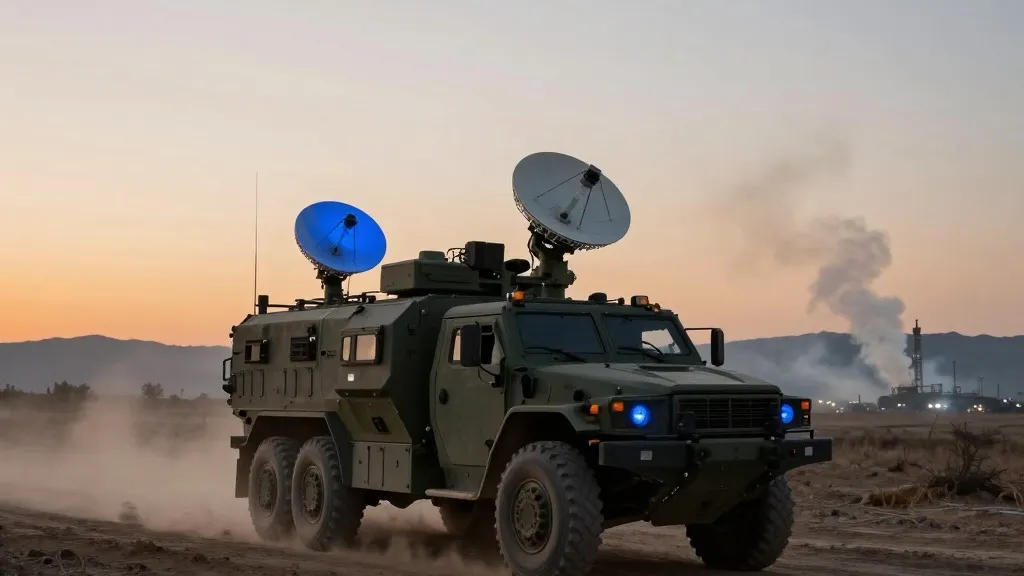
The return of full speed to Ukraine’s military satellite links marks a pivotal shift in the logistical capacity of the front lines.
The disruption began roughly two weeks ago when connectivity issues emerged. At the time, Ukrainian officials reported that satellite links were dropping at speeds of about 161 kilometers per hour. This limitation prevented drone interceptors and other fast-moving equipment from maintaining stable connections. The restrictions persisted until October 24, when President Volodymyr Zelenskyy announced that the Starshield system was operating at its previous levels. He described the recovery as very important for defending against jet-powered drones. Defense Minister Yevheniy Khmara confirmed that monitoring systems now record stable connectivity on equipment moving faster than 400 kilometers per hour.
The exact source of the initial slowdown remains a subject of debate. Serhiy Beskrestnov, a defense technology adviser, suggested a connection to recent diplomatic tensions between Kyiv and Washington, though no formal link has been established. The Trump administration denies that the president or any other US official requested the changes. Elon Musk, whose company SpaceX provides the service, has stated that the government controls Starshield decisions. Meanwhile, the Wall Street Journal reported that President Donald Trump spoke with Musk to urge the lifting of restrictions. Trump said that if a problem exists, he will get it straightened out. Lawmakers from both parties in Congress have sought clarification on who authorized the changes and are seeking guarantees for reliable access.
The timing of the fix coincides with a period of heightened friction. In the past two weeks, the US announced a deal encouraging Russian diesel exports and waived upcoming sanctions. President Trump also urged Kyiv to pause attacks on Russian oil refineries, attributing high diesel prices to those strikes rather than Middle East energy flows. Zelenskyy initially considered a pause but said Kyiv was done with unilateral stops after Putin ordered continued strikes on Ukraine.
Combat operations continued through the night. Ukrainian air defense forces reported shooting down 100 of 130 Russian drones. Attacks on 15 locations resulted in at least two fatalities. In response, Ukrainian forces struck two industrial facilities in Russia, including a missile components factory in Oryol and a rubber products plant in Togliatti. The latter produces a key component for solid rocket fuel. Additionally, most of Russian-occupied Crimea lost electricity and internet connectivity in the early hours. Russian authorities blamed a drone attack on main power lines, while Ukrainian monitors noted a fire at the Taman substation in Russia's Krasnodar region.
As a fifth winter of war approaches, the restoration of communication speeds provides Ukraine with a crucial technical advantage. However, with peace talks stalled and no concessions from the Kremlin, the strategic landscape remains tense. The recovery of the Starshield network is seen as a significant step toward stabilizing battlefield coordination, even as the broader diplomatic and military conflicts continue to evolve.
Source: RFE/RL