Tesla Sets Year-End Date for First Cybercab Deliveries
The automaker plans to begin handing over its wheel-less robotaxi to private customers by December, though most units will remain part of Tesla's own fleet.
By Emily Carter ·
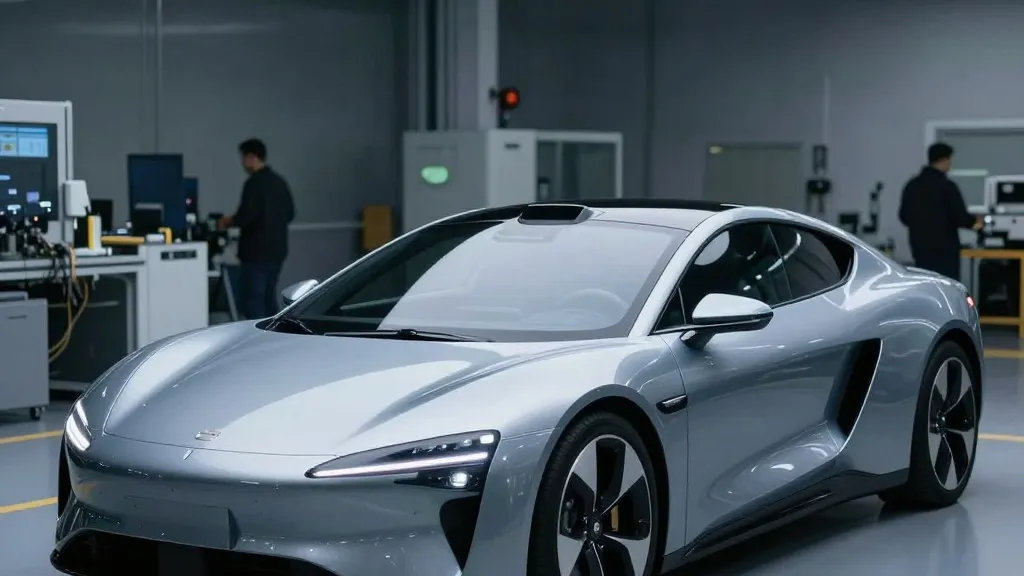
Tesla has finally put a concrete timeline on the availability of its Cybercab, the company’s first purpose-built autonomous vehicle. During its third-quarter 2026 earnings call held on October 21, the automaker confirmed that it intends to start delivering the two-seater robotaxi to individual customers before the end of the current year. This announcement marks a significant shift from previous vague timelines, providing a clear target date for when the highly anticipated vehicle will transition from a fleet-only asset to a purchasable product for the general public.
Lars Moravy, Tesla’s Vice President of Engineering, provided the specific details during the conference call. He stated that the company is targeting the delivery of Cybercabs to customers by the close of 2026. However, Moravy clarified that the initial phase of production is focused entirely on internal operations. Currently, every unit rolling off the production line at Gigafactory Texas is being allocated to Tesla’s internal Robotaxi fleet. This approach allows the company to refine its operations before expanding to external buyers.
The strategy involves a gradual rollout of private ownership. Moravy explained that as the company’s operations scale, it will primarily deliver fully designed autonomous vehicles to customers, with the Cybercab serving as the inaugural model. The initial customer deliveries are expected to be limited in volume. This cautious approach is designed to help Tesla gain necessary experience in delivery logistics, ownership models, and the management of fleets where the vehicles are not under the company’s direct operational control.
Elon Musk, Tesla’s CEO, reinforced the idea that private ownership will not be the dominant mode of acquisition for this specific vehicle. He described the Cybercab primarily as a "transport-as-a-service" offering, distinguishing it from traditional personal vehicles like the Model 3, Model Y, or the upcoming Roadster. According to Musk, the vast majority of Cybercabs will remain owned by Tesla and operated as part of its service network, rather than being sold to individual consumers for personal use.
The Cybercab itself is a unique entry in the automotive market, designed as a two-seater without a steering wheel or pedals. It relies entirely on Tesla’s Full Self-Driving software suite to navigate. Production of the vehicle began in February 2026, and early units were integrated into Tesla’s Robotaxi service in early September. That same month, the company officially launched public rides, marking the first time the vehicle was used in a commercial capacity without a human driver on board.
Financially, Tesla has previously indicated that the Cybercab will be priced at approximately $30,000. This price point is intended to make the vehicle attractive for both fleet operators and potential private buyers, although the company’s current emphasis on fleet ownership suggests that the bulk of these units will serve as commercial assets rather than private property.
Despite the set delivery date, there are still technical and regulatory hurdles to overcome. Ashok Elluswamy, Tesla’s Head of AI, noted during the call that unsupervised Full Self-Driving is expected to ship to consumer cars during the second quarter of 2027. This timeline suggests that early Cybercab buyers or fleet operators may face geographically restricted autonomous operation capabilities due to the pace of regulatory approvals.
The distinction between the Cybercab and other Tesla models is becoming clearer as the company prepares for these deliveries. While other models are designed for personal ownership with driver assistance features, the Cybercab is built from the ground up for autonomous operation. The phased rollout strategy allows Tesla to manage the complexities of transitioning from a controlled fleet environment to a broader market where customers take ownership of the hardware.
As the year comes to a close, attention will turn to the first batch of Cybercabs delivered to private hands. The success of these initial deliveries will likely determine the pace at which Tesla expands private sales in the future. For now, the vehicle remains a cornerstone of Tesla’s transport-as-a-service vision, with the company positioning it as a key component of its long-term strategy for autonomous mobility.
The announcement ends a period of speculation regarding the near-term availability of the Cybercab for purchase. By setting a definitive date for customer deliveries, Tesla has provided clarity on its production and distribution plans. The company’s focus remains on scaling its Robotaxi fleet while simultaneously preparing the infrastructure needed to support private ownership of its most advanced autonomous vehicle.
Source: Teslarati