Tesla's 'Hands-Free' Dream Shrinks: Unsupervised Driving Delayed to 2027 and Confined to Small Zones
Tesla has pushed back its timeline for unsupervised Full Self-Driving to the second quarter of 2027, restricting the feature to specific Robotaxi geofences rather than offering it as a universal capability for all owners.
By Eduardo Salazar ·
The gap between Tesla’s marketing promises and its current operational reality widened significantly on Tuesday, as the company officially delayed the launch of unsupervised Full Self-Driving (FSD) for customer-owned vehicles to the second quarter of 2027. This announcement, made during the Q3 2026 earnings call, represents the latest shift in a timeline that CEO Elon Musk has been adjusting for nearly a decade. For California readers, the delay is particularly notable given the state's strict regulatory environment for autonomous vehicles.
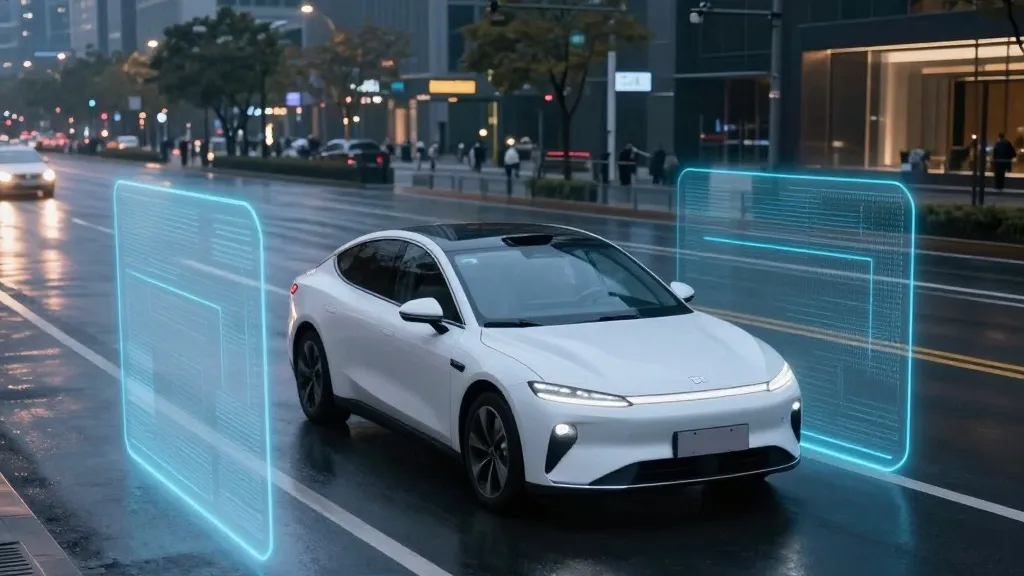
The core of the new strategy is a significant redefinition of what 'unsupervised' means for the average buyer. Ashok Elluswamy, Tesla’s AI chief, explained that the feature will not function as a standalone software update that allows owners to drive anywhere in their personal cars. Instead, Tesla plans to integrate customer vehicles into its managed Robotaxi fleet. This means a driver can only operate unsupervised while their car is within the specific geographic boundaries where Tesla’s Robotaxi service is already active.
This restriction places the technology in a narrow corridor. Currently, Tesla’s Robotaxi operations are limited to six U.S. metropolitan areas, with service areas covering only small, specific slices of those cities. For example, the Miami zone is confined to West Miami and a strip toward Doral and Sweetwater. New launches in Orlando and Tampa this past July also feature similarly small geofences. Within these areas, the vehicles stick to low-speed routes and largely avoid highways and complex urban environments.
The scale of the current operation remains modest compared to industry rivals. By the end of the third quarter, Tesla reported nearly 2 million cumulative unsupervised miles, a milestone reached shortly after the Cybercab joined the Austin fleet. However, third-party tracking from earlier this year indicated that only dozens of fully driverless Teslas were on the road, far fewer than the hundreds of thousands Musk previously envisioned. In contrast, competitor Waymo had already established a presence in both Orlando and Tampa before Tesla’s entry and has logged over 3 million miles.
California presents a unique challenge for Tesla’s rollout. Unlike other regions, the Bay Area service is not yet unsupervised. State regulations require a safety driver in every vehicle because Tesla has not yet released the necessary data to the California DMV, a step required for any system beyond Level 2 autonomy. This regulatory hurdle adds another layer of complexity to the Q2 2027 timeline, especially as the company navigates its relationship with state regulators while competing with established players like Waymo and Mercedes-Benz in the driverless space.
Shareholders have long pressed for clarity on this front. A question backed by approximately 1.1 million shares asked when unsupervised FSD would arrive in customer cars. Elluswamy’s response reaffirmed the Q2 2027 target but emphasized that safety remains the primary bottleneck. He noted that Tesla is currently limiting operations to simpler, lower-speed environments to ensure reliability, with the hope that these safety issues will be resolved by next year. For buyers who purchased FSD with the expectation of a car that drives itself anywhere, the new model, where the car works for Tesla within a controlled zone, marks a distinct shift in expectations.
Source: Electrek