AI Data Center Expansion Must Deliver Energy Dividends to Local Grids
A new federal directive requires AI infrastructure projects to return surplus power to communities to counteract rising utility costs.
By Noor Haddad ·
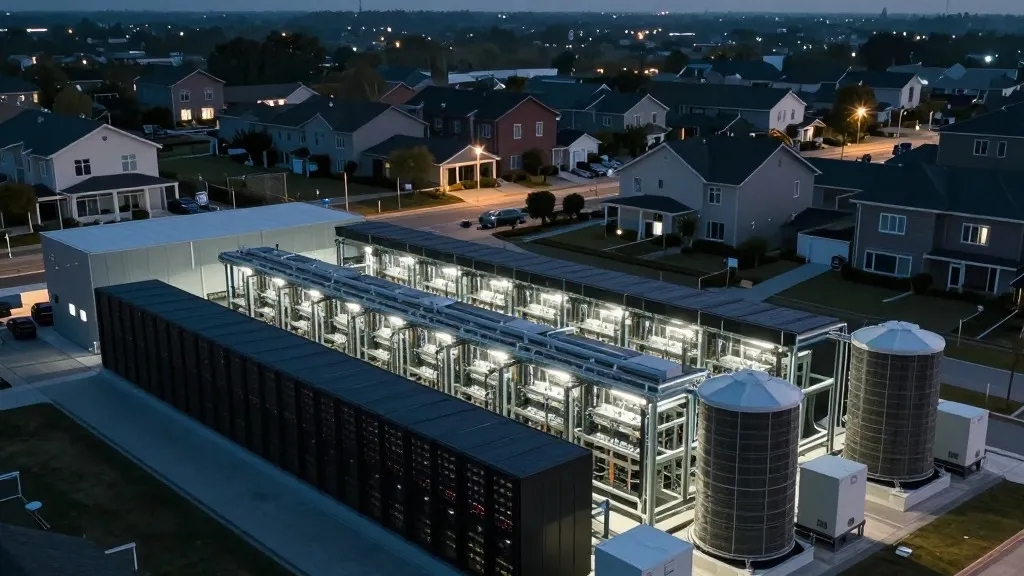
A federal mandate is being implemented to prevent AI data center construction from increasing local electricity rates, instead requiring these facilities to contribute to community energy affordability. Announced on Wednesday, October 21, 2026, this policy directs hyperscalers and data center builders to divert surplus power generated for their operations back to the local grid. The administration’s objective is to neutralize or lower utility costs for nearby residents, reversing the trend where infrastructure expansion leads to higher household bills.
This directive is intended to resolve a growing conflict between national technology goals and local quality-of-life concerns. Across the United States, communities have organized opposition against data centers due to noise pollution, water shortages, air pollution, and deforestation. While the federal government seeks to maintain dominance in the AI arms race against China, local residents often face the direct environmental and economic fallout of this infrastructure. The proposed solution involves financial compensation to mitigate these burdens, though the specific mechanism for distributing these funds remains under review.
President Trump stated in a Truth Social post that providing financial benefits to localities could shift public sentiment regarding these projects. “Data Centers that were highly unpopular in a certain area have become extremely popular when a financial deal is struck,” he wrote. He concluded the statement with the directive: “MAKE DEALS, and get them built!!!” This indicates a strategy to facilitate construction by aligning corporate interests with community needs.
The financial structure of this proposal builds upon previous orders requiring these companies to generate their own electricity. A recently passed act also mandates that data centers shoulder the costs of grid upgrades to prevent local taxes from absorbing those expenses. If the excess electricity generated by these facilities is sold back to the community, it could directly subsidize the electricity costs for residents living near these sites. This creates a closed-loop system where the energy consumed by AI operations potentially funds the surrounding infrastructure.
The administration views this arrangement as a means to balance economic growth with public acceptance. By framing the return of energy as a dividend, the government aims to address the immediate economic pain points felt by households. However, the practical application of this policy is currently uncertain, as the administration has not detailed how these financial arrangements will be operationalized. The intent remains focused on ensuring that the presence of data centers results in a net positive for the local energy market.
Despite the financial incentives, significant hurdles regarding the environmental impact of data centers persist. Concerns regarding enormous water consumption, ecological damage, and pollution remain unresolved by this policy. Communities continue to express apprehension regarding the physical footprint of these facilities, regardless of financial compensation. Consequently, the success of this mandate relies on whether financial dividends can sufficiently offset the non-economic costs associated with hosting these facilities.
The implementation of this policy faces the challenge of resolving conflicts that extend beyond financial transactions. While the administration aims to streamline the approval process for new data centers, local opposition persists due to issues that money cannot easily solve. The focus on energy dividends addresses utility rate hikes, but it does not directly address water usage or noise pollution. The outcome will determine if financial incentives are sufficient to secure the cooperation of local communities.
Attention now turns to the practical application of these directives and the construction of new facilities. The administration intends to utilize this approach to expedite the building of data centers. The effectiveness of this strategy hinges on whether local residents accept financial compensation in exchange for the environmental changes. The administration’s goal is to secure the necessary approvals to advance the AI infrastructure agenda without delay.
Source: Tom's Hardware